Alexander Dennis в хронологічному порядку
TransBus Enviro300 '2001–04
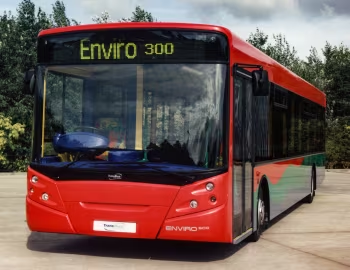
In 1998, Plaxton owner Henlys had attempted to buy the company's primary chassis supplier, Dennis, only to be outbid by Mayflower, who had acquired Alexander three years earlier. In 2000, the two groups combine their UK bus and coach manufacturing interests in TransBus International. Faced with overcapacity and duplicate products, the new company consolidates some of its operations, but manages to retain its major production centres, albeit at a reduced scale. 2001 – TransBus takes a unified design approach to new products, developing chassis and body together. The Enviro300 single decker is the first of a new generation of buses that ensures maximum capacity through the best use of available space. It is followed a year later by the Enviro500 three-axle double decker, aimed primarily at export markets in North America and the Asia-Pacific region.
Alexander Dennis Enviro500 '2002–н.ч.
![Alexander Dennis Enviro500 [Germany] (H80T) '10.2020–22](https://s3.wheelsage.org/format/picture/picture-thumb-large/a/alexander_dennis/enviro500/alexander_dennis_enviro500_50_0a2d05760ae40841.avif "Alexander Dennis Enviro500 [Germany] (H80T) '10.2020–22")
![Alexander Dennis Enviro500 [Germany] (H80T) '10.2020–22](https://s3.wheelsage.org/format/picture/picture-thumb-medium/a/alexander_dennis/enviro500/alexander_dennis_enviro500_610_04cf06160f760b6a.avif "Alexander Dennis Enviro500 [Germany] (H80T) '10.2020–22")
![Alexander Dennis Enviro500 [Hong Kong] '02.2013–15](https://s3.wheelsage.org/format/picture/picture-thumb-medium/a/alexander_dennis/enviro500/alexander_dennis_enviro500_905.avif "Alexander Dennis Enviro500 [Hong Kong] '02.2013–15")
![Під капотом Alexander Dennis Enviro500 demonstrator [North America] '08.2014](https://s3.wheelsage.org/format/picture/picture-thumb-medium/a/alexander_dennis/enviro500/alexander_dennis_enviro500_110.avif "Під капотом Alexander Dennis Enviro500 demonstrator [North America] '08.2014")
![Передня панель Alexander Dennis Enviro500EV Charge demonstrator [North America] (H53/29D) '01.2021](https://s3.wheelsage.org/format/picture/picture-thumb-medium/a/alexander_dennis/enviro500ev_charge/alexander_dennis_enviro500ev_charge.avif "Передня панель Alexander Dennis Enviro500EV Charge demonstrator [North America] (H53/29D) '01.2021")
The Enviro500 is the world’s best-selling low-floor, three-axle double deck bus, with over 6,000 sold since its introduction in 2002 to operators in Britain, Ireland, Switzerland, Hong Kong, Singapore, Malaysia, New Zealand, Canada, the United States and Mexico.
![Alexander Dennis Enviro500 [Hong Kong] '11.2002–13](https://s3.wheelsage.org/format/picture/picture-thumb-medium/a/alexander_dennis/enviro500/alexander_dennis_enviro500_41.avif "Alexander Dennis Enviro500 [Hong Kong] '11.2002–13")
![Alexander Dennis Enviro500 [Australia] '04.2008](https://s3.wheelsage.org/format/picture/picture-thumb-medium/a/alexander_dennis/enviro500/alexander_dennis_enviro500_61_0030002102f00237.avif "Alexander Dennis Enviro500 [Australia] '04.2008")
![Alexander Dennis Enviro500 [Hong Kong] '11.2002–13](https://s3.wheelsage.org/format/picture/picture-thumb-medium/a/alexander_dennis/enviro500/alexander_dennis_enviro500_72.avif "Alexander Dennis Enviro500 [Hong Kong] '11.2002–13")
![Передня панель Alexander Dennis Enviro500 [Hong Kong] '11.2002–13](https://s3.wheelsage.org/format/picture/picture-thumb-medium/a/alexander_dennis/enviro500/alexander_dennis_enviro500_57.avif "Передня панель Alexander Dennis Enviro500 [Hong Kong] '11.2002–13")
![Alexander Dennis Enviro500 [Hong Kong] '11.2002–13](https://s3.wheelsage.org/format/picture/picture-thumb-medium/a/alexander_dennis/enviro500/alexander_dennis_enviro500_89.avif "Alexander Dennis Enviro500 [Hong Kong] '11.2002–13")


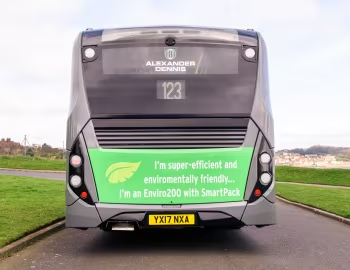
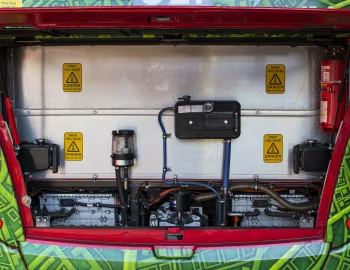
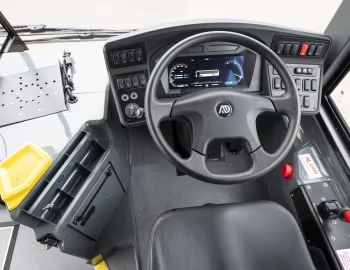
Alexander Dennis Enviro200 '2003–07Виготовлені 5 одиниці"/>
The Alexander Dennis Enviro200 (previously known as the TransBus Enviro200) was a midibus manufactured by TransBus International and later Alexander Dennis since 2003. The original TransBus Enviro200 design was innovative but ultimately unsuccessful, with few being sold before the introduction of the second generation Enviro200 (originally referred to as the Enviro200 Dart) revived sales for the product from 2006.
The first generation Enviro200, then known as the TransBus Enviro200, was unveiled at Coach & Bus 2003 by the vehicle's then-manufacturer, TransBus International. Two diesel trial buses were initially produced for display in 2003.
![Alexander Dennis Dart SLF East Lancs Myllennium [UK-spec] (B40F) '12.2005–05.2007](https://s3.wheelsage.org/format/picture/picture-thumb-medium/a/alexander_dennis/east_lancs/dart_slf_myllennium/alexander_dennis_dart_slf_east_lancs_myllennium_2.avif "Alexander Dennis Dart SLF East Lancs Myllennium [UK-spec] (B40F) '12.2005–05.2007")
![Alexander Dennis Dart SLF East Lancs Myllennium [UK-spec] (B40F) '12.2005–05.2007](https://s3.wheelsage.org/format/picture/picture-thumb-medium/a/alexander_dennis/east_lancs/dart_slf_myllennium/alexander_dennis_dart_slf_east_lancs_myllennium_1.avif "Alexander Dennis Dart SLF East Lancs Myllennium [UK-spec] (B40F) '12.2005–05.2007")
![Alexander Dennis Dart SLF East Lancs Myllennium [UK-spec] (B40F) '12.2005–05.2007](https://s3.wheelsage.org/format/picture/picture-thumb-medium/a/alexander_dennis/east_lancs/dart_slf_myllennium/alexander_dennis_dart_slf_east_lancs_myllennium_5_00cf009c04eb03b2.avif "Alexander Dennis Dart SLF East Lancs Myllennium [UK-spec] (B40F) '12.2005–05.2007")
![Alexander Dennis Dart SLF East Lancs Myllennium [UK-spec] (B40F) '12.2005–05.2007](https://s3.wheelsage.org/format/picture/picture-thumb-medium/a/alexander_dennis/east_lancs/dart_slf_myllennium/alexander_dennis_dart_slf_east_lancs_myllennium_7.avif "Alexander Dennis Dart SLF East Lancs Myllennium [UK-spec] (B40F) '12.2005–05.2007")
WheelsAge.org '2005–н.ч.